







MUSCAT: The Public Authority for Special Economic Zones and Free Zones (OPAZ) has achieved positive growth indicators in localising investment projects and maximising the economic impact of the zones under its supervision, driven by efforts to enhance institutional integration and expand strategic partnerships.
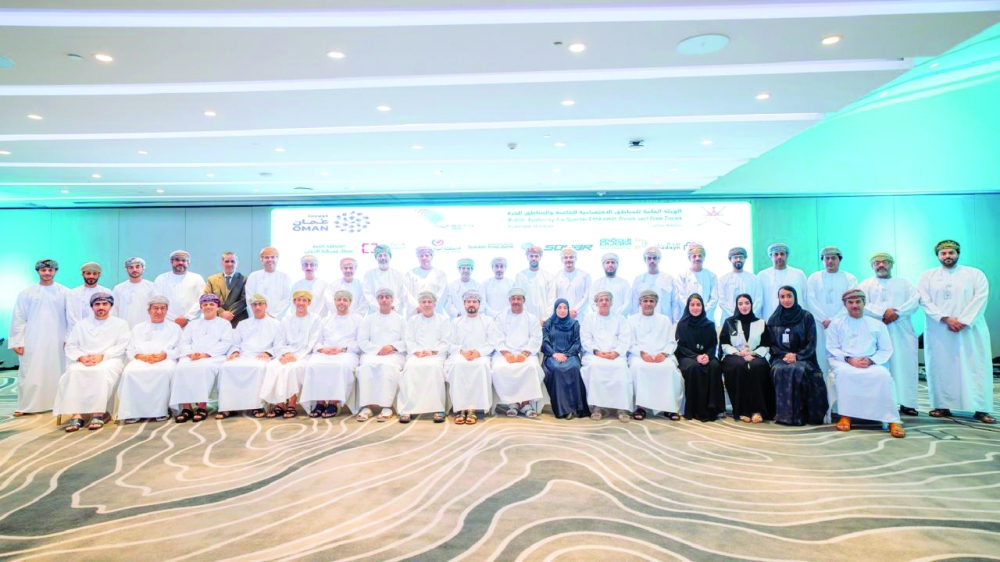
An expanded meeting hosted by the OPAZ last week, brought together the Board of Directors, executive management, and CEOs of zones and operating companies. The highlight of the meeting was a package of visions, proposals, and initiatives aimed at supporting sustainable growth and enhancing the competitiveness of these zones.
OPAZ’s five-year plan (2026–2030) aims to enable special economic zones, free zones, and industrial cities to achieve balanced growth in projects and investments while maximising their economic impact. This will be achieved by focusing on developing and regulating these zones and providing an attractive and sustainable investment environment.
On the planning and development front, the plan focuses on delivering integrated solutions, including fully serviced land and strategic infrastructure, alongside developing new zones in approved locations based on economic and urban studies. It also emphasises the development of priority clusters and activities in line with the goals of Oman Vision 2040.
Officials explained that the plan places strong emphasis on enhancing the business-enabling regulatory environment and overseeing zone performance, in addition to simplifying procedures and offering integrated services to investors, with a focus on aftercare to ensure business sustainability and expansion. Marketing is a key pillar of the plan, with efforts underway to strengthen partnerships with relevant entities to implement integrated promotional programmes both locally and internationally, and to develop marketing materials and value propositions targeting investors in priority sectors.
Accelerating business
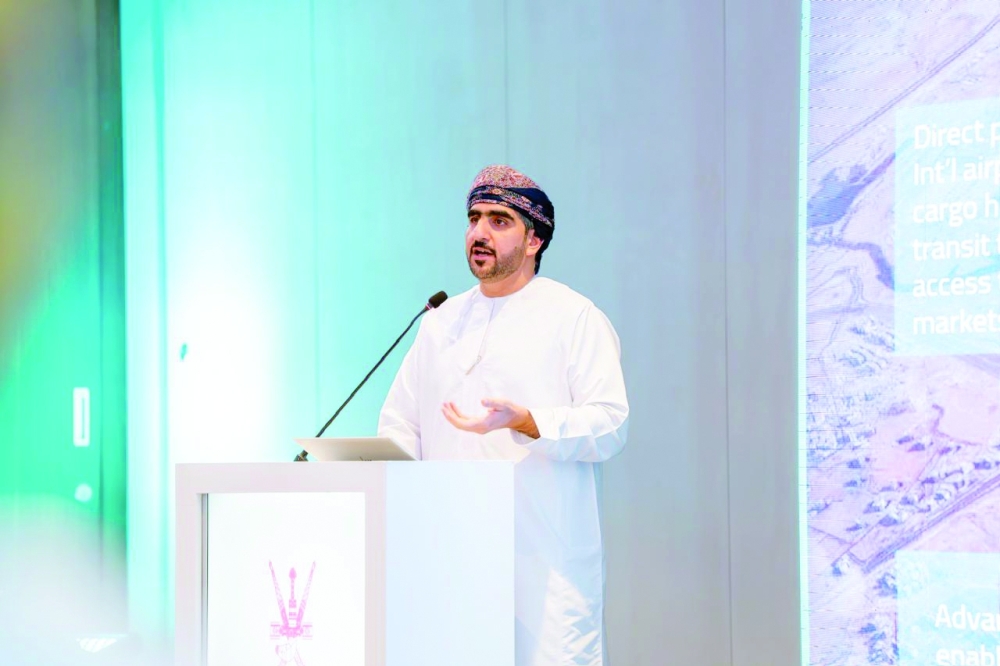
The Board affirmed that the plan focuses on supporting operations and accelerating business through the implementation of priority strategic initiatives that stimulate economic growth and create job opportunities. It also aims to enhance institutional excellence by developing capabilities and systems that support efficient strategy execution.
Work is also progressing at an accelerated pace to activate the Comprehensive Economic Partnership Agreement with India within the OPAZ’s zones, focusing on promising sectors such as logistics, ports, manufacturing industries, information technology, and renewable energy. This will enhance the benefits of the agreement in boosting trade exchange, facilitating partnerships, and supporting economic diversification.
Zayana bint Mohammed al Rashdi, Member of the OPAZ’s Board, stated that the logistics, ports, manufacturing, information technology, and renewable energy sectors are well-positioned to achieve significant gains from the Comprehensive Economic Partnership Agreement with India, which is considered the largest bilateral trade agreement signed by the Sultanate of Oman since the Free Trade Agreement with the US. She noted that the expanded meeting highlighted the importance of the agreement and the role expected from operating companies and businesses in activating it and leveraging its advantages, including enhancing bilateral trade, removing customs barriers, and facilitating partnerships between business communities in both countries.
Dr Musallam bin Mahad Qattan, Chairman of Asyad Group, stated that the Group is a strategic partner to the Authority through its prominent role in managing and operating several free zones and special economic zones under the OPAZ’s supervision. He noted that the expanded meeting was an important opportunity to review the OPAZ’s plans for the coming years, whether in developing zones, attracting investments, localising projects, or creating employment opportunities for youth.
Tourism waterfront project
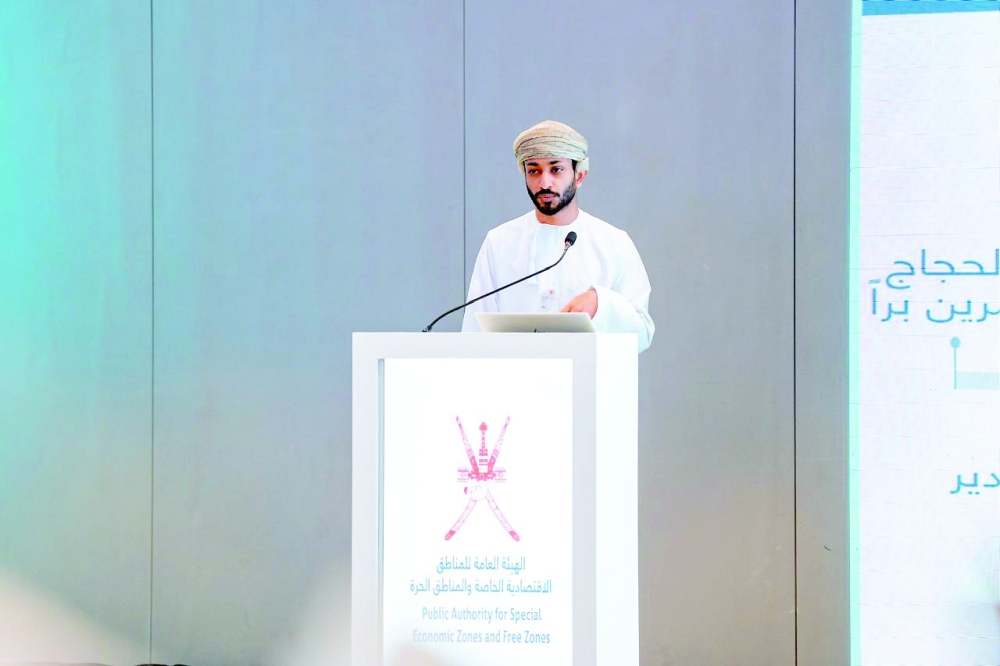
Eng Ahmed bin Ali Akaak, CEO of the Special Economic Zone at Duqm (SEZAD), explained that the zone has doubled its total investment over recent years, reaching RO 6.4 billion by the end of last December, compared to RO 3.6 billion in December 2021. He noted that the zone’s strategic plan focuses on establishing a sustainable city and business ecosystem, providing reliable business solutions, and offering support and guidance to local and international investors.
He added that the zone’s strategic goals include localising investments across various sectors, ensuring efficient operations and management, promoting a balanced lifestyle, attracting tourism and partners, and achieving institutional excellence. The zone has achieved significant progress in attracting and diversifying investments, activating SMEs, and creating job opportunities for Omani youth. The Omanisation rate in ongoing projects rose to 30.9 per cent by the end of last December, compared to 17.8 per cent in December 2021.
The zone hosts 492 economic activities and around 2,000 companies from 30 countries, with investors representing 34 nationalities.
Attracting projects
Faisal bin Ali al Balushi, General Manager of Muscat International Airport Free Zone under Asyad Group, stated that the zone focuses on enabling trade and attracting quality international projects by providing world-class infrastructure, simplified systems, and value-added services. These enable companies to thrive through efficient air connectivity.
He added that the zone aims to become a fully integrated global logistics hub, leveraging its strategic location at Muscat International Airport to ensure faster cargo handling, reduced transit times, and easy access to regional and global markets. It also benefits from multimodal logistics services within Asyad’s integrated network, linking air, sea, and land transport with free zones and special economic zones, in collaboration with the private sector. This supports increased exports and imports, particularly for goods requiring fast supply chains such as pharmaceuticals, food products, and e-commerce shipments.
Export-oriented industrial base
Eng Azzan bin Said al Hasni, Project Director for the development of the Special Economic Zone in Al Rawdha, highlighted the zone’s advantages, noting its location in Mahdha, Al Buraimi Governorate, approximately 80 km from Dubai in the UAE and 125 km from Suhar. This strategic position qualifies it to become an export-oriented industrial base and a key logistics hub, benefiting from quick access to Jebel Ali Port and Sohar Port, thereby maximising economic returns for projects established in the zone.
He noted that the Phase I of land preparation began in the first quarter of this year, with upcoming tenders for surface water drainage systems and infrastructure works expected to be awarded in the coming months. Infrastructure implementation is expected to begin in Q3.
Eng. Ibrahim bin Yousuf al Zadjali, Project Director for the Special Economic Zone in Al Dhahirah Governorate near the Oman–Saudi border, reviewed the project’s progress, stating that completion rates for the first package, including main roads and drainage systems, have exceeded 22 per cent and are ahead of schedule. Work is ongoing to tender the second package covering internal roads and related services, with additional packages planned for a dry port, veterinary quarantine facilities, and administrative and commercial complexes.
Oman Observer is now on the WhatsApp channel. Click here


